

Machiavelli and sixteenth-century Italy
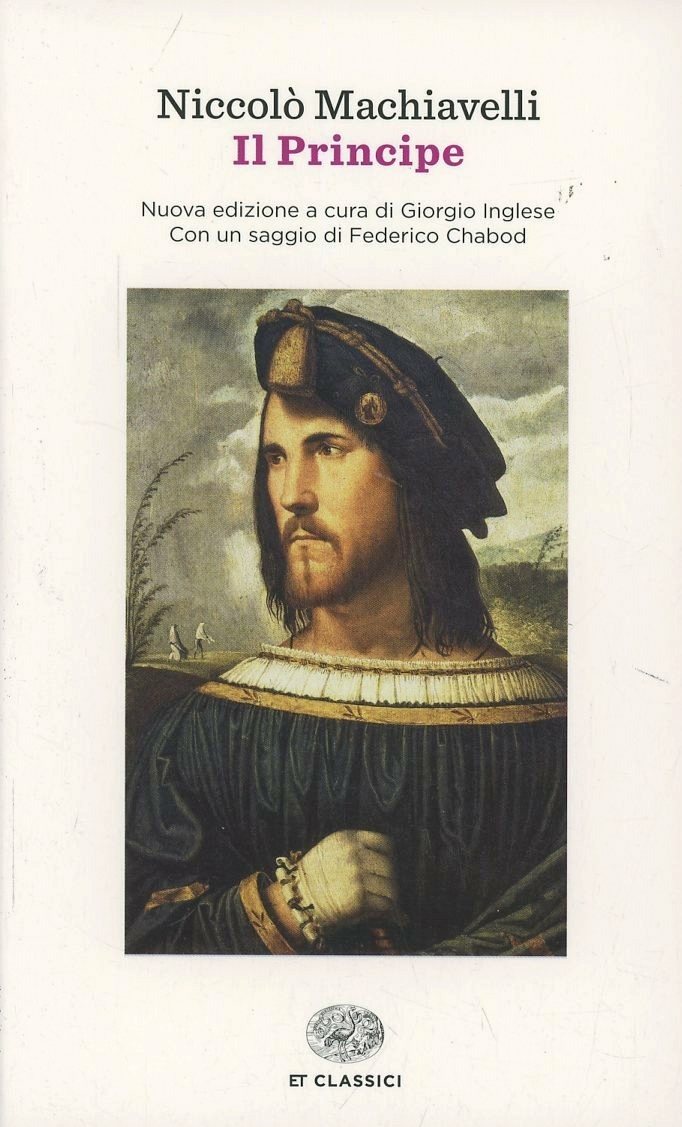
To understand the Church of his time, grandfather goes back to the sixteenth century and to Niccolò Machiavelli, who looked at Italy as «un paese infelice» (“an unhappy country”). And he quotes The Prince from memory: «l'Italia battuta, spogliata, lacera, corsa, attraversata dagli eserciti che saccheggiavano e rapinavano» (“Italy beaten, despoiled, torn, overrun, crossed by armies that sacked and plundered”) (31:57–32:32).
Nota: le parole di Machiavelli sono: «più schiava che gli Ebrei, più serva che i Persi, più dispersa che gli Ateniesi, senza capo, senz'ordine, battuta, spogliata, lacera, corsa, ed avesse sopportato d'ogni sorta rovine» (Il Principe, cap. XXVI)1.
Translation Note: Machiavelli's words are: “more enslaved than the Hebrews, more servile than the Persians, more scattered than the Athenians, without a head, without order, beaten, despoiled, torn, overrun, and having endured every kind of ruin” (The Prince, chapter XXVI).
The four adjectives are exactly Machiavelli's, in the last chapter, the «Esortazione a pigliare l'Italia e liberarla dalle mani de' barbari» (“Exhortation to seize Italy and free her from the hands of the barbarians”). The plundering armies are grandfather's addition, and it is history: from the descent of Charles VIII in 1494 the peninsula became the battlefield of France and Spain.
Then comes the missed opportunity. «La Chiesa, in un momento, sembrava che potesse fare insieme il suo interesse e quello dell'Italia, con un principe, il Duca Valentino» (“At one moment it seemed that the Church could serve both its own interest and Italy's, with a prince, Duke Valentino”) (32:32–32:49). This is Cesare Borgia, son of Pope Alexander VI, the model of chapter VII of The Prince. «In realtà poi questa illusione, questo sogno… quest'occasione storica non si concluse positivamente.» (“In reality this illusion, this dream… this historic opportunity did not end well.”) With his father's death, in 1503, Valentino's fortune ended2.
Grandfather sums up his underlying judgement with a formula that has circulated for centuries: «La Chiesa non è tanto forte da fare essa l'Italia, e non è tanto debole da impedire che altri la facciano» (“The Church is not strong enough to make Italy itself, and not weak enough to prevent others from making it”) (33:02–33:29).
Nota: le parole di Machiavelli sono: «Non essendo, adunque, stata la Chiesa potente da potere occupare la Italia, né avendo permesso che un altro la occupi, è stata cagione che la non è potuta venire sotto uno capo» (Discorsi sopra la prima Deca di Tito Livio, I, 12)3.
Translation Note: Machiavelli's words are: “Since the Church, then, has not been powerful enough to occupy Italy, nor has allowed another to occupy it, it has been the cause that Italy could not come under one head” (Discourses on the First Decade of Titus Livy, I, 12).
Grandfather's formula is tighter, but the meaning is exactly this.
From the sixteenth century to the twentieth is a short step. «Oggi la Chiesa in Italia che fa? Gli italiani, come cattolici, come vivono?» (“What does the Church in Italy do today? How do Italians live, as Catholics?”) Grandfather quotes the critic Luigi Russo, who «parlava degli italiani come di cattolici atei» (“spoke of Italians as atheist Catholics”) (33:35)4. And he does justice to a political opponent: «La Democrazia cristiana ebbe tante colpe, ma non certamente quella di essere servile nei confronti della Chiesa» (“Christian Democracy had many faults, but certainly not that of being servile towards the Church”), because De Gasperi always refused to form «un governo puramente, esclusivamente, soltanto democristiano» (“a purely, exclusively, solely Christian Democrat government”) (33:46–34:26). The fact is true. In the elections of 18 April 1948 the DC won an absolute majority in the Chamber, 305 seats out of 574, but De Gasperi governed in coalition with Liberals, Social Democrats and Republicans5. That those allies «in realtà erano satelliti» (“were in reality satellites”) is grandfather's judgement.
Video by Orazio Garofalo (opens in a new tab), a friend of Umile Francesco Peluso and his family, published with his permission
Video source: YouTube channel @oraziogarofalorende (opens in a new tab) (uploaded on 9/12/2025). Speaker: Umile Francesco Peluso.
Sources
- Niccolò Machiavelli, Il Principe, chapter XXVI: it.wikisource.org (opens in a new tab) ↩
- Il Principe, chapter VII (Cesare Borgia, «chiamato dal vulgo duca Valentino», “called Duke Valentino by the common people”): it.wikisource.org (opens in a new tab) ; Treccani, «Borgia, Cesare» (Dizionario Biografico). ↩
- Discorsi sopra la prima Deca di Tito Livio, I, 12: it.wikisource.org (opens in a new tab) ↩
- Luigi Russo, «Noterelle e schermaglie», Belfagor, 1960: «da cattolico ateo egli [Fellini] “mercifica” […] anche la religione» (“as an atheist Catholic he [Fellini] ‘commodifies’ […] even religion”), quoted in G. P. Brunetta, mymovies.it (opens in a new tab) ; it.wikipedia.org (opens in a new tab) (information from Daniele Calabrese, 22/11/2026). ↩
- Wikipedia, «Elezioni politiche in Italia del 1948»: it.wikipedia.org (opens in a new tab) ; Italian Government, «Governo De Gasperi V» (DC, PLI, PSLI, PRI): governo.it (opens in a new tab) ; Treccani, «De Gasperi, Alcide» (Dizionario di Storia). ↩
Books cited
- Il Principe (capp. XXVI, VII, XII) Niccolò MachiavelliFeltrinelli (opens in a new tab)
- Discorsi sopra la prima Deca di Tito Livio (I, 12) Niccolò MachiavelliFeltrinelli (opens in a new tab)