

Words change, things remain
Context: 7 January 2002. Since June 2001 the second Berlusconi government has been in office. Two days earlier, on 5 January, the foreign minister Renato Ruggiero resigned after a clash over the euro with some Eurosceptic ministers. Grandfather's judgement on the government is a political polemic of those days, spoken by a former PCI senator. We report it as such.
The chapter begins with an old word. Berlusconi, says grandfather, is not a builder «di mondi ideali, di opere d'arte» (“of ideal worlds, of works of art”): «È uno di quelli che una volta si chiamavano pescecani» (“He is one of those who were once called sharks”, i.e. profiteers) (34:26–34:54). And he wonders why that word is no longer used: «le parole oramai sono addolcite tutte» (“words have all been sweetened by now”). Hence the sentence that gives the chapter its title: «Un filosofo antichissimo della Grecia diceva: se volete imbrogliare, se volete dare l'illusione del cambiamento, cambiate le parole, e le cose restano le stesse» (“A very ancient Greek philosopher said: if you want to cheat, if you want to give the illusion of change, change the words, and things stay the same”) (35:04–35:23)1.
Nota: attribuzione apocrifa; fonti vicine: Tucidide, Storie III, 82 (versia.it (opens in a new tab)) e Gorgia, Encomio di Elena (livingpoets.awh.durham.ac.uk (opens in a new tab)) (indicazione di Daniele Calabrese, 22/11/2026).
Translation Note: apocryphal attribution; close sources: Thucydides, Histories III, 82 and Gorgias, Encomium of Helen (information from Daniele Calabrese, 22/11/2026).
The judgement on the government is very harsh: «probabilmente il peggiore governo che l'Italia abbia avuto nel corso della sua storia» (“probably the worst government Italy has had in the course of its history”) (35:23). Grandfather compares it to the Italy of the sixteenth century, the Italy of «Franza o Spagna, purché se magna» (“France or Spain, as long as we eat”)2. But he also recalls that in that same Italy there were those who did not sell themselves. And he does it with poetry: a great Renaissance artist imagines Italy as a marble statue that speaks (35:54–37:15).
It is Michelangelo's Night, in the New Sacristy of San Lorenzo in Florence, the Medici chapel. A man of letters, Giovanni Strozzi, had written an epigram: Night is sleeping and, if you don't believe it, wake her and she will speak to you. Michelangelo answered by making the statue speak. Grandfather recites it from memory (36:49).
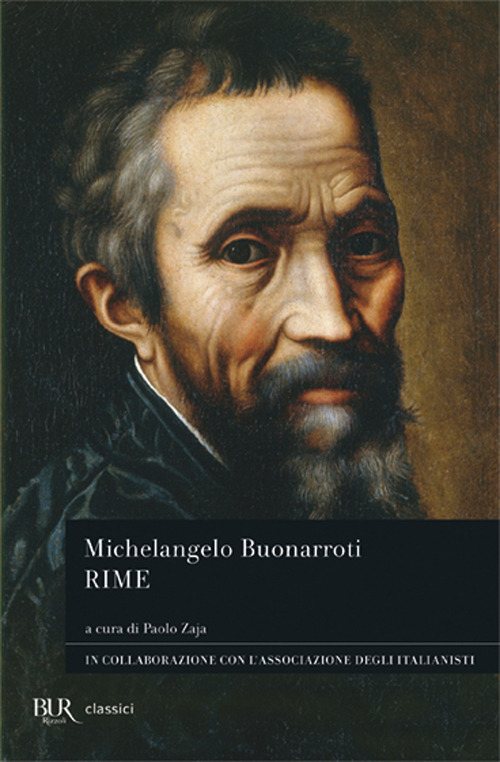
Nota: i versi di Michelangelo sono: «Caro m'è 'l sonno, e più l'esser di sasso, / mentre che 'l danno e la vergogna dura; / non veder, non sentir m'è gran ventura; / però non mi destar, deh, parla basso»3.
Translation Note: Michelangelo's lines are: “Dear to me is sleep, and dearer still to be of stone, / while harm and shame endure; / not to see, not to hear is my great fortune; / so do not wake me, pray, speak softly”.
For grandfather too, as for Michelangelo, sleep is the only defence against shame. And the Italy of that time, he explains, «era stata conquistata col gesso, senza combattimento, col gesso che serviva per tracciare sul terreno i segni dove dovevano essere messi gli accampamenti» (“had been conquered with chalk, without a fight, with the chalk used to mark on the ground where the camps were to be set up”) (37:15–37:30). It is the famous judgement on the descent of Charles VIII in 1494, taken up by Machiavelli in chapter XII of The Prince: «a Carlo re di Francia fu lecito pigliare Italia col gesso» (“Charles, King of France, was allowed to take Italy with chalk”)4.
Then he comes back to current events. The government is not «soltanto contro l'Europa, come si dice in questi giorni, che ha scacciato il ministro degli Esteri» (“only against Europe, as people say these days, having driven out the foreign minister”): in his view it is «al servizio della parte peggiore del governo degli Stati Uniti» (“at the service of the worst part of the United States government”) (38:45–39:18). Grandfather distinguishes: the «colombe» (“doves”), like Secretary of State Colin Powell, seek dialogue with moderate Muslims, while the Defence Secretary, Donald Rumsfeld, wants «la guerra infinita, per una giustizia infinita» (“infinite war, for an infinite justice”) (39:18–40:39). «Giustizia infinita», Infinite Justice, had been the first name of the military operation, changed after a few days to Enduring Freedom5. And he notes ironically that, «siccome nell'elenco hanno messo anche le Brigate Rosse… anche l'Italia ospita il terrorismo» (“since they have also put the Red Brigades on the list… Italy too harbours terrorism”). It is true: since 7 December 2001 the BR-PCC had been on the American Terrorist Exclusion List6. Finally, the countries to be struck: «sessanta, forse sessantuno» (“sixty, perhaps sixty-one”). Bush, before Congress on 20 September 2001, had spoken of terrorists «in more than 60 countries»7.
Video by Orazio Garofalo (opens in a new tab), a friend of Umile Francesco Peluso and his family, published with his permission
Video source: YouTube channel @oraziogarofalorende (opens in a new tab) (uploaded on 9/12/2025). Speaker: Umile Francesco Peluso.
Sources
- Apocryphal attribution (online to Socrates or Plato). Close sources: Thucydides, Histories III, 82, versia.it (opens in a new tab) ; Gorgias, Encomium of Helen, 8, livingpoets.awh.durham.ac.uk (opens in a new tab) (information from Daniele Calabrese, 22/11/2026). ↩
- A popular saying born in the Italian Wars of the sixteenth century. The attribution to Francesco Guicciardini is widespread but undocumented. ↩
- Michelangelo Buonarroti, Rime, no. 247, ed. E. N. Girardi, Laterza 1960, p. 117: it.wikisource.org (opens in a new tab) . Edition in print: Michelangelo, Rime, BUR, ISBN 9788817029087. ↩
- Il Principe, chapter XII. The Wikisource edition reads «col gesto» (it.wikisource.org (opens in a new tab)); the current reading is «col gesso», that is, with the chalk of the quartermasters who marked the lodgings of the French troops. Nineteenth-century historiography on Wikisource explains it the same way («la disser fatta col "gesso" dei forieri», “they said it was done with the quartermasters' ‘chalk’”). ↩
- Corriere della Sera, 5/1/2002, «Polemica sull'euro, Ruggiero si dimette»: corriere.it (opens in a new tab) . On the name «Infinite Justice», changed to «Enduring Freedom» on 25 September 2001: Wikipedia, «Operation Enduring Freedom». [primary source to be added] ↩
- U.S. Department of State, «Terrorist Exclusion List (TEL)», entry «Red Brigades-Combatant Communist Party (BR-PCC)», designated on 7/12/2001: 2001-2009.state.gov (opens in a new tab) ↩
- G. W. Bush, address to Congress, 20/9/2001 («There are thousands of these terrorists in more than 60 countries»): avalon.law.yale.edu (opens in a new tab) ↩
Books cited
- Il Principe (capp. XXVI, VII, XII) Niccolò MachiavelliFeltrinelli (opens in a new tab)
- Rime (n. 247, «Caro m'è 'l sonno…», risposta a Giovanni Strozzi sulla «Notte») Michelangelo BuonarrotiFeltrinelli (opens in a new tab)
- La guerra del Peloponneso (Storie), III, 82 TucidideFeltrinelli (opens in a new tab)
- Encomio di Elena GorgiaFeltrinelli (opens in a new tab)