

The godfather's letter and the murdered word
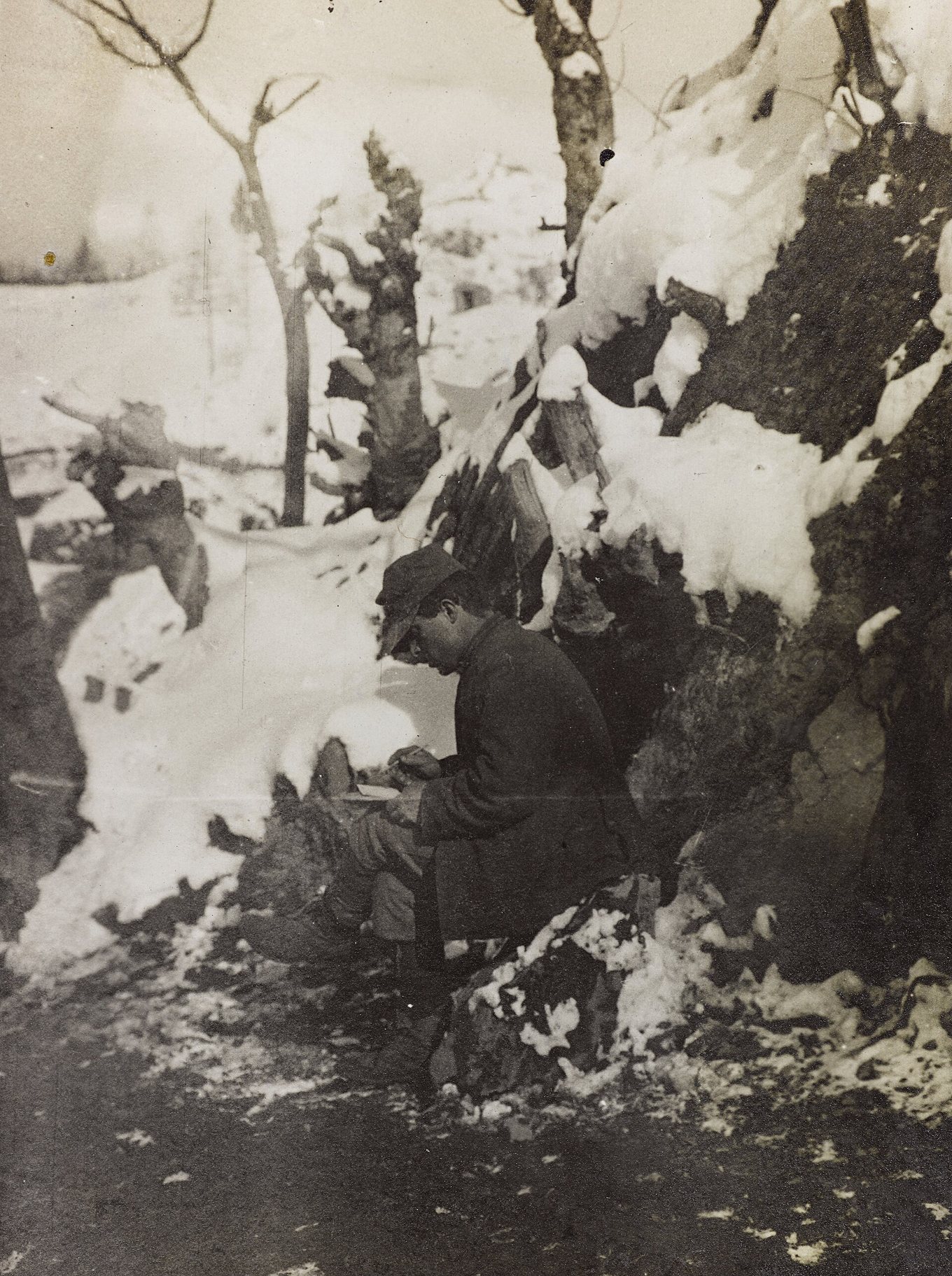
The news of the father's death does not arrive with a telegram from the ministry. It arrives with a letter between compari. «Io conservo una lettera» (“I keep a letter”), says grandfather (07:36), «una lettera scritta da un compare suo, che fece conoscere la notizia non a mia madre ma a un altro compare, un ciabattino di nome Luigi Serra, un ciabattino di Luzzi» (“a letter written by a compare of his, who made the news known not to my mother but to another compare, a cobbler called Luigi Serra, a cobbler from Luzzi”) (07:43–08:09)1.
In the peasant South of those days the compare (the godfather at baptism or confirmation, the best man at a wedding) was almost a relative. The most terrible news was given to him, so that he would then bring it to the widow.
Then grandfather, a professor of literature and a poet, judges it like a critic: «E questa lettera è meravigliosa. Ogni parola ha almeno due errori, ma così piena di sentimento, così piena di umanità, di dolore, che non ho mai letto, in nessuno scrittore né italiano né straniero, una pagina simile» (“And this letter is marvellous. Every word has at least two mistakes, but it is so full of feeling, so full of humanity, of grief, that I have never read a page like it in any writer, Italian or foreign”) (08:09–08:46)2.
There is a precise idea inside these words: the value of a page does not lie in its grammar, it lies in the truth of what it says. A peasant soldier, writing with effort, found the right words to tell of a friend's death. Many professional writers cannot do it.
That is why grandfather wants to make it public: «Questa lettera un giorno o l'altro la pubblicherò, come modello di scrittura, in un tempo che ha dimenticato la parola, ha ucciso la parola» (“One day or another I will publish this letter, as a model of writing, in a time that has forgotten the word, has killed the word”) (08:46–09:00). And he goes on: it is a time that has put images in the place of the word, and has not only invented them, «addirittura ha creato» (“has even created”) a reality that he calls «infame» (“vile”) (09:01–09:15).
From here his public talk begins: «Dunque io ho vissuto il secolo, sto vivendo anche il principio del terzo millennio, e questo secolo lo vorrei intitolare "Menzogne e massacri", e poi, come sottotitolo, "Le verità necessarie"» (“So I have lived through the century, I am also living the beginning of the third millennium, and I would like to call this century ‘Lies and massacres’, and then, as a subtitle, ‘The necessary truths’”) (09:24–09:47)3.
The thread is clear. On one side there is the ungrammatical, truthful letter of the compare. On the other there are the images and the lies of the twentieth century. The «verità necessarie» (“necessary truths”) grandfather is looking for stand on the side of that letter.
Video by Orazio Garofalo (opens in a new tab), a friend of Umile Francesco Peluso and his family, published with his permission
Video source: YouTube channel @oraziogarofalorende (opens in a new tab) (uploaded on 9/12/2025). Speaker: Umile Francesco Peluso.
Sources
- «Luigi Serra» is heard the same way by four automatic passes: turbo, large-v3 and Whisper small at normal speed and slowed to 0.75× (22/11/2026). Only the first small pass gave «di Ruxi». The name of the compare who wrote the letter is not said. It would be good to confirm the cobbler's name with the family or with the letter itself. ↩
- Here the voices overlap. Turbo hears «e non sono scrittore né italiano né straniero»; Whisper small, at 1× and at 0.75×, hears «in nessuno scrittore, nell'italiano, un estraniero». I keep «in nessuno scrittore né italiano né straniero» (“in any writer, Italian or foreign”), which makes sense of the sentence. ↩
- In the audio the title sounds like «Benzogne e massacri» in all transcriptions, but it is clearly «Menzogne» (“Lies”), as in the title of Garofalo's video. ↩